Tensions across the Middle East escalated sharply on Tuesday as Iran warned the United States that its response to recent military moves in the Strait of Hormuz “has not even begun,” raising fears that the region could slide into a broader confrontation.
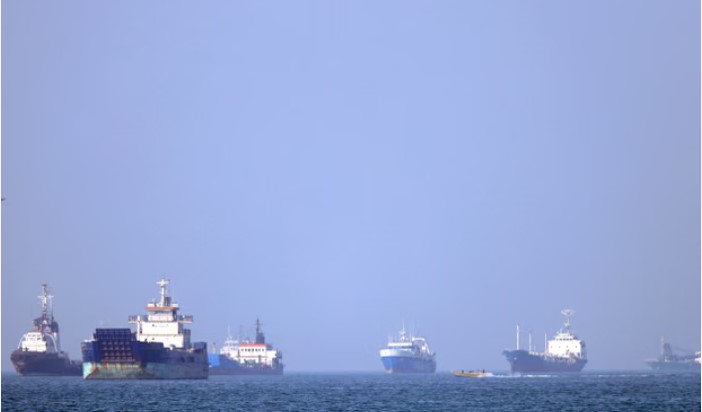
The warning came amid growing clashes around one of the world’s most important maritime chokepoints. The Strait of Hormuz, which connects the Persian Gulf with the Gulf of Oman, is a critical route for global energy shipments and has become the center of an increasingly dangerous standoff between Tehran and Washington. Al Jazeera has described the strait as a passageway for roughly a fifth of the world’s oil supply. (Al Jazeera)
The latest confrontation follows a U.S.-led effort known as “Project Freedom,” which Washington says is intended to guide commercial vessels through the strait and protect ships not involved in the conflict. CBS News reported that President Donald Trump announced the operation after shipping became trapped or threatened by the crisis. (CBS News)
Iranian officials have rejected the U.S. operation, arguing that foreign military activity in the waterway will only worsen instability. Sky News reported that Iran’s foreign minister, Abbas Araghchi, mocked the U.S. plan as “Project Deadlock” and warned that there was “no military solution” to the crisis. (Sky News)
The situation has been further complicated by conflicting claims from both sides. U.S. officials have said American forces destroyed several Iranian fast boats after they allegedly threatened shipping, while Iranian sources have disputed Washington’s account and accused the U.S. of escalating the confrontation. The Times reported that both sides have traded claims over attacks and naval incidents in the strait. (The Times)
The crisis has also placed commercial shipping companies, oil markets and regional governments on edge. Any prolonged disruption in the Strait of Hormuz could have major consequences for energy prices, supply chains and global inflation. Several countries, including Gulf states and Asian importers, are watching the situation closely because of their heavy dependence on oil and gas flows from the region.
Beyond the Gulf, the wider Middle East remains volatile. Fighting and cross-border strikes involving Israel, Lebanon and Iran-aligned groups have added pressure to already fragile ceasefire efforts. Sky News reported that Israel has issued evacuation orders in parts of southern Lebanon as clashes with Hezbollah continue. (Sky News)
Diplomatic efforts have so far failed to bring the crisis under control. Regional actors and international powers have called for restraint, but neither Washington nor Tehran appears ready to step back fully. Iran says it will defend its sovereignty and maritime interests, while the U.S. says it will protect freedom of navigation and commercial shipping.
Analysts warn that the Strait of Hormuz now represents one of the most dangerous flashpoints in the region. Even a limited naval clash could quickly draw in allies, disrupt energy markets and widen the conflict beyond the Gulf.
For now, the standoff remains unpredictable. Iran’s warning that it “has not even begun” its response signals that Tehran may be preparing further action if U.S. operations continue. Washington, meanwhile, appears determined to keep the waterway open.
As warships, drones and commercial vessels move through the crowded waters of the Gulf, the risk of miscalculation is growing. The coming days may determine whether the crisis remains a tense maritime standoff or becomes the trigger for a much larger regional conflict.